AI Chatbots Tell People What They Want To Hear — Why That’s Dangerous (M)
Even a single interaction with a flattering AI reduced people’s willingness to take responsibility.
Even a single interaction with a flattering AI reduced people’s willingness to take responsibility.
AI helps solve logic tests — but destroys self-insight.
Can AI ever fully understand human psychology?
Can AI ever fully understand human psychology?
Artificial intelligence is still way behind an infant in making basic psychological inferences, a study comparing the two finds.
An 11-month-old can make basic inferences about the goals, intentions and preferences of others that AI still struggles with.
The research shows the leaps AI still has to make in order to go beyond computation to human-like cognition.
The conclusions come from a study that had 11-month-old infants watching a series of animated shapes moving around the screen.
The movement of the shapes was designed to replicate basic human behaviour and decision-making.
Both infants and the AI, which had been trained on thousands of examples, were tested on what they understood about the videos.
The results were summed up by Dr Moira Dillon, study co-author:
“Adults and even infants can easily make reliable inferences about what drives other people’s actions.
Current AI finds these inferences challenging to make.”
The infants demonstrated, for example, that they know that invisible human motivations persist across environments (in other words, we keep striving for things we want no matter where we are).
Scientists infer preverbal children’s understanding with a so-called ‘surprise paradigm’.
Over the decades, researchers have found that infants tend to look longer at things which surprise them.
The AI, though, could not understand the underlying motivations enacted by the shapes in the video.
In other words, it was not ‘surprised’ when the unwritten laws of human behaviour were suddenly changed or the environment was different.
Dr Brenden Lake, study co-author, said:
“If AI aims to build flexible, commonsense thinkers like human adults become, then machines should draw upon the same core abilities infants possess in detecting goals and preferences.”
Human thought is flexible, applicable to many situations and contexts, Dr Dillon said:
“A human infant’s foundational knowledge is limited, abstract, and reflects our evolutionary inheritance, yet it can accommodate any context or culture in which that infant might live and learn.”
AI ‘thought’, in contrast, is still very limited when it comes to understanding human psychology.
The study was published in the journal Cognition (Stojnić et al., 2023).
What happens when someone in crisis turns to an AI chatbot for help? The results are not reassuring.
The older the AI, the worse it performed on the Montreal Cognitive Assessment (MoCA) test.
In 2023, AI dominated the headlines and researchers around the world started to examine how it might help (and harm) us.
In 2023, AI dominated the headlines and researchers around the world started to examine how it might help (and harm) us.
In 2023 one could not escape talk of artificial intelligence (AI).
Depending on who you believe, it promised either miraculous benefits, or first stealing our jobs then destroying the world.
Quite a wide margin of error on those predictions, then.
Naturally, the truth is no one knows what it is capable of.
Psychologists, at least, started to try and work out what it might do for them right now, including:
Here, then, are 10 studies on artificial intelligence from the members-only section of PsyBlog.
(If you are not already, find out how to become a PsyBlog member here.)
Can AI ever fully understand human psychology?

Young people who ‘spoke’ to an AI ‘therapist’ experienced improved well-being over six weeks.
While not wholly accurate, the AI can get the gist of the stories in people’s minds.

Using an AI chatbot on a phone is like having a therapist in your pocket, available 24/7.
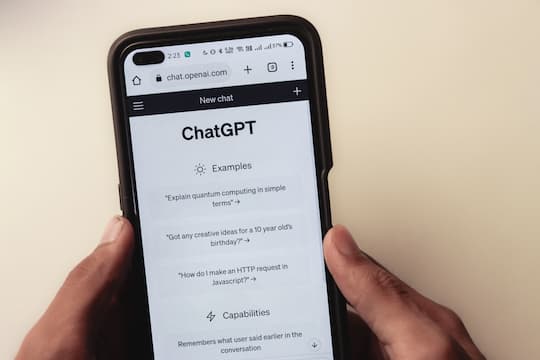
Now that Dr ChatGPT is taking over from Dr Google, are the responses AI gives good, bad or indifferent?

More people will be working with artificial intelligence systems in the future — but what will be the psychological effect?

An infodemic is an epidemic-like circulation of fake news, videos and images that is highly contagious and grows exponentially.

Antidepressant use has increased by 65 percent in 15 years, but the treatment is hit-and-miss.

Will human coaches and therapists still be required when AI becomes sophisticated enough?

The diagnosis of other mental health conditions by AI could soon follow.
.
The diagnosis of other mental health conditions by AI could soon follow.
Will human coaches and therapists still be required when AI becomes sophisticated enough?
Using an AI chatbot on a phone is like having a therapist in your pocket, available 24/7.
Researchers have found a way to identify people who might be unwittingly at greater risk of emotional contagion.
Join the free PsyBlog mailing list. No spam, ever.