
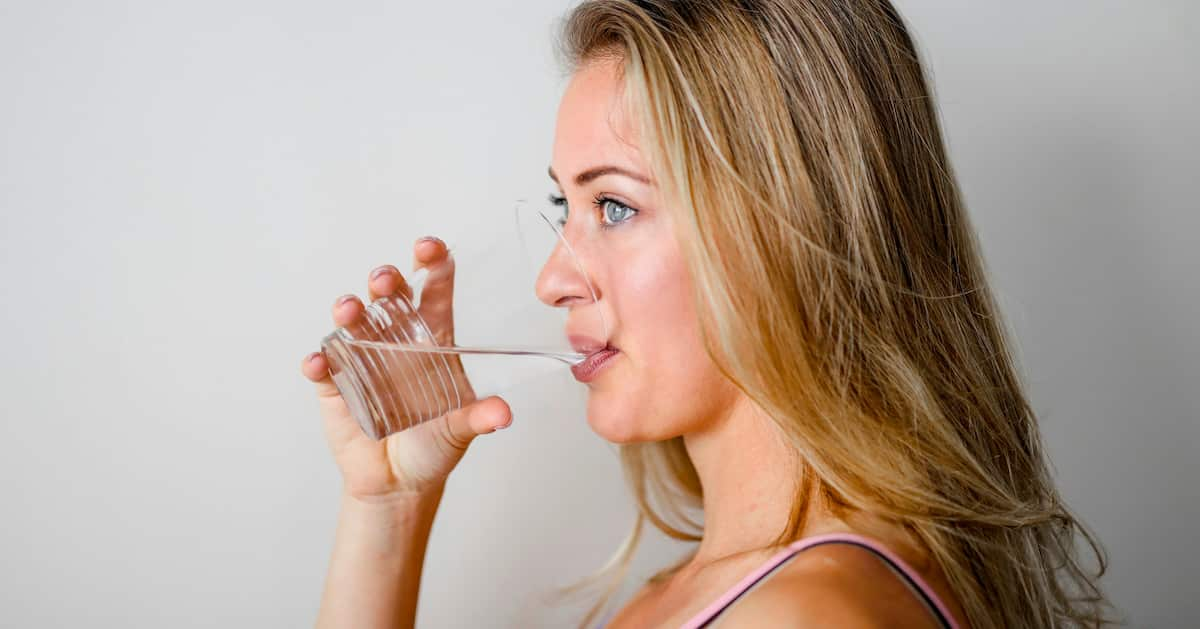
Women who changed their usual lunchtime drink lost 41 per cent more weight over 18 months. What made the difference?
Swapping diet drinks for water could help people lose more weight.
Women with type 2 diabetes who make the switch lose around 41 percent more weight over 18 months than those who continue drinking diet beverages.
They are also twice as likely to achieve diabetes remission during a structured weight-management programme.
The findings raise a question about whether a drink’s calorie count tells the whole story about its effects on weight.
Sweet taste without the accompanying energy might influence appetite signals.
The results suggest that everyday drink choices could play a useful supporting role in longer-term weight management.
A lunchtime swap
The research involved around 80 women who were overweight or had obesity, had type 2 diabetes and regularly consumed diet drinks.
Researchers randomly assigned them either to replace their usual diet beverage with water after lunch five times a week or to continue drinking it.
Both groups took part in a six-month weight-loss programme followed by a year devoted to maintaining their progress.
By the end, women assigned to water had lost an average of 6.82 kg, compared with 4.85 kg among those continuing with diet drinks.
The difference amounted to almost 2 kg of additional weight loss across the programme.
The water group also showed greater improvements in measures including fasting blood glucose, insulin resistance and blood fats.
Diabetes remission was reported in 90 percent of women assigned to water, compared with 45 percent of those continuing diet beverages.
Dr Hamid R. Farshchi, study co-author, said:
“It’s a small change with the potential for a big impact on long-term health outcomes.”
Sweetness and appetite
The brain may respond differently when a sweet taste arrives without the energy normally supplied by sugar.
In a separate experiment involving around 75 adults, participants reported greater hunger after consuming sucralose than sugar, and the sweetener altered activity in the hypothalamus, a brain region involved in appetite regulation (Chakravartti et al., 2025).
However, hunger ratings after sucralose did not differ from those after water, so the findings do not establish that sweetened drinks necessarily make people hungrier than plain water.
The mismatch between sweetness and energy might help explain some appetite responses, but whether it contributed to the weight-loss difference remains unknown.
Related
The study was published in the journal Diabetes (Farshchi Nasr et al., 2025).