
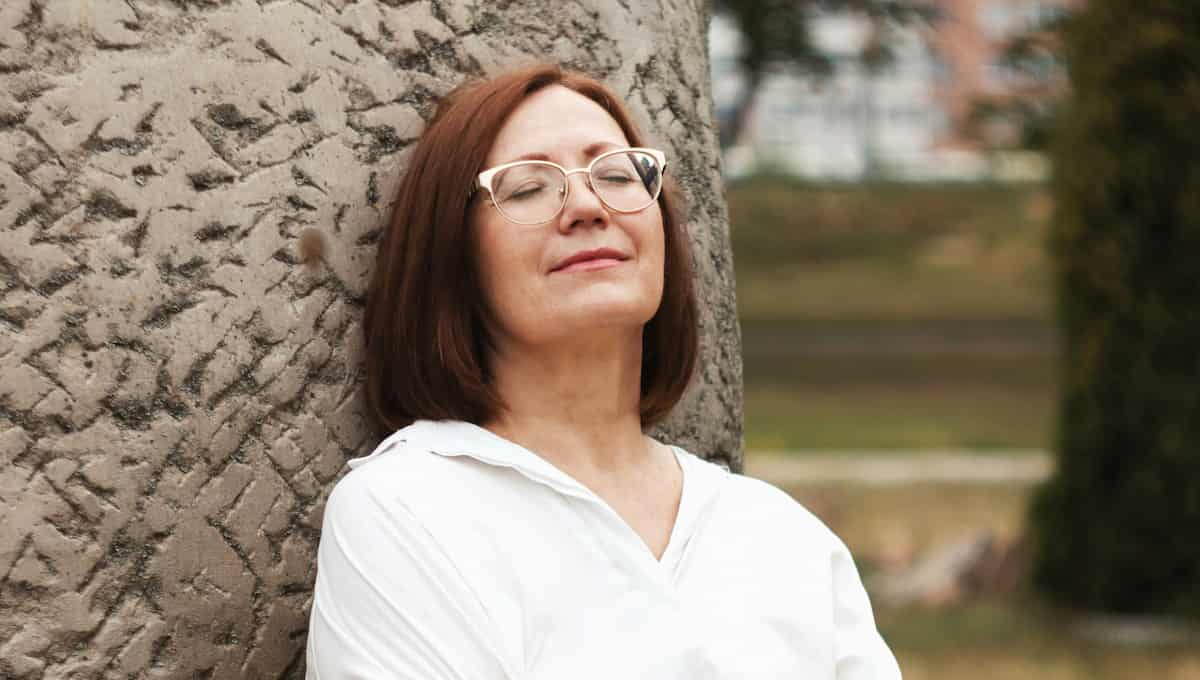
Relaxing is a challenge for people with this trait.
People who have anxious personality traits can find it hard to relax.
Unfortunately, relaxation exercises, including meditation, can paradoxically make some people more anxious, research finds.
Research suggests that this ‘relaxation-induced anxiety’ may occur because some people intentionally make themselves anxious.
People with anxiety often worry that relaxing will leave them vulnerable to something bad happening.
As a form of protection, they may deliberately keep themselves anxious.
Professor Michelle Newman, study co-author, explained:
“The theory revolves around the idea that people may make themselves anxious intentionally as a way to avoid the letdown they might get if something bad were to happen.
This isn’t actually helpful and just makes you more miserable.
But, because most of the things we worry about don’t end up happening, what’s reinforced in the brain is, ‘I worried and it didn’t happen so I should continue worrying.'”
As a result, relaxation treatments can sometimes increase anxiety rather than reduce it.
Mr Hanjoo Kim, the study’s first author, said:
“People who are more vulnerable to relaxation-induced anxiety are often the ones with anxiety disorders who may need relaxation more than others.
And of course, these relaxation techniques were meant to help, not make someone more anxious.
Our findings will hopefully serve as a cornerstone for providing better care for these populations.”
The study included 96 people, including one-third with an anxiety disorder, one-third with depression and the rest as controls.
The results showed that people with anxiety, and to a lesser extent those with depression, were more sensitive to shifts in their emotional state.
They were also more likely to become anxious when trying to relax.
Professor Newman explained:
“People may be staying anxious to prevent a large shift in anxiety, but it’s actually healthier to let yourself experience those shifts.
The more you do it, the more you realize you can do it and it’s better to allow yourself to be relaxed at times.
Mindfulness training and other interventions can help people let go and live in the moment.”
Related
- 12 Studies Reveal The Life-Changing Habits That Crush Anxiety (P)
- 9 Ways To Relieve Anxiety Without Medication (P)
The study was published in the Journal of Affective Disorders (Kim & Newman, 2019).