
Blind People’s Other Senses Not More Acute

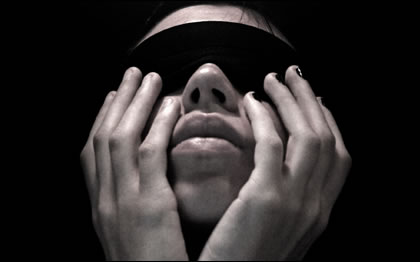
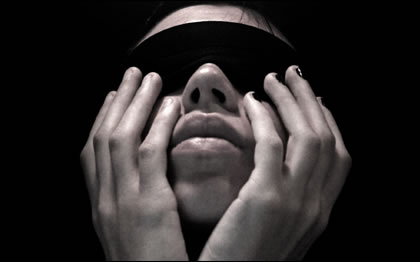
Blindfolded

Mind-myth 2: studies show that the blind's other senses are not more acute, but they can learn some amazing skills to compensate, like echolocation.

It's an oft-repeated idea that blind people's other senses compensate for their lack of sight. Like the idea that we only use 10% of our brains, it is probably repeated because its rosy optimism seems harmless. In fact it's a myth with a kernel of truth.

To shoot this myth down we need to make an important distinction. There is a difference between having better hearing, and using auditory information more effectively, which some blind people do to an extraordinary degree. This difference is at the root of the myth. Let's have a look at what the studies have found.

Smelling

Studies have compared the threshold at which blind and sighted young people can identify smells. Rosenbluth, Grossman and Kaitz (2000), for example, found no difference in this, nor in blinded and sighted children's ability to identify the different smells they were exposed to. The blind children did, however, give a wider range of labels to the smells, suggesting they paid more attention to smells.

Hearing

The spatial hearing abilities of blind and sighted individuals were examined by Ashmead et al. (1998). They tested how well participants were able to tell the direction a sound was coming from. In this test the blind children did perform better, but only marginally so. Again, this suggests blind children are making better use of their sense of hearing, not that their sense of hearing is ramped up to compensate for lack of sight.

Touching

Perhaps, though, despite not having superior olfactory or auditory powers, blind children have a better sense of touch? Morrongiello et al. (1994) tested this by giving blind and (blindfolded) sighted children different types of objects to identify. Some objects were miniature versions of large objects, like a bicycle, while other objects were oversized versions of small objects, such as a big key.

In fact both groups got the same number of objects correct, had problems with the same objects and seemed to use the same strategies to identify the objects. A study on older children did, however, find evidence that by the age of 13 blind children had developed superior tactile strategies than sighted children (D'Angiulli, Kennedy & Heller, 1998).

Other senses?

Of course smelling, hearing and feeling are not the only human senses. There is also taste along with less-famous but no less vital senses like thermoception (temperature), equilibrioception (balance) and proprioception (body awareness). I haven't been able to find studies on these but I'd be willing to bet the findings would be the same as for hearing, feeling and smelling.

So strictly speaking the myth is just that, blind people's other senses don't compensate for their lack of sight. But, while blind people don't have a more acute sense of smell, taste or touch, they can use these senses more effectively.

Learning echolocation

Using echolocation is one of the most striking demonstrations of the way in which people can make more effective use of their sense of hearing. Dan Kish is the Director of World Access for the Blind and this inspiring short film explains how he uses echolocation to safely ride a bicycle on the public roads, just by clicking his tongue. This is absolutely fantastic!

» Find out if any other mind-myths catch you out.

[Image credit: Violater3]

References

Ashmead, D. H., Wall, R. S., Ebinger, K. A., Eaton, S. B., Snook-Hill, M. M., & Yang, X. (1998). Spatial hearing in children with visual disabilities., Perception, 27(1), 105-22.

D'Angiulli, A., Kennedy, J. M., & Heller, M. A. (1998). Blind children recognizing tactile pictures respond like sighted children given guidance in exploration, Scandinavian Journal of Psychology, 39, 187-190.

Rosenbluth, R., Grossman, E. S., & Kaitz, M. (2000). Performance of early-blind and sighted children on olfactory tasks, Perception, 29(1), 101-110.

Morrongiello, B. A., Humphrey, G. K., Timney, B., Choi, J., & Rocca, P. T. (1994). Tactual object exploration and recognition in blind and sighted children., Perception, 23(7), 833-48.


  • Share/Save/Bookmark

11 comments

  1. T Skid C says:

    That clip was absolutely amazing. Inspirational indeed.

  2. Tom Goddard says:

    Very interesting, but a misleading headline. "Blind People's Other Senses Not More Acute" doesn't quite mesh with the following:
    "A study on older children did, however, find evidence that by the age of 13 blind children had developed superior tactile strategies than sighted children (D'Angiulli, Kennedy & Heller, 1998)." Let's just say that the myth is not as clear as we once thought, ok?

  3. Anonymous says:

    I think there's a psychological tendency to enjoy "debunking" myths so much that people overstate the case against the urban legend. It's one reason that Mythbusters can get silly. The "skills" that come with compensating for missing senses might well be considered a part of those senses as far as you can perceive, meaning that yes, blind people's other senses are often more acute.

    In essence, this article would be much cleaner if it had simply said "Blind People's Other Senses Are More Acute," since that's more or less the subject matter.

  4. shadowlapis says:

    This is a straw man argument.

    You immediately set out to make a distinction between 'acuteness' and 'better use.' But as far as the "myth" is concerned that distinction is never made in common parlance or thought. If the average person read only the conclusions of the articles you cited they would walk away thinking, "Wow. Blind people really do have more acute senses."

    So really you didn't shoot down the "myth" at all - you proved its truth.

  5. Jeremy (PsyBlog author) says:

    Tom, you've missed this sentence:

    "There is a difference between having better hearing, and using auditory information more effectively..."

    Anon and Shadowlapis, I think what this comes down to is 'what you think other people' think. You tend to think other people are as well-informed as you and understand there is a difference between how sensitive a person's hearing is, and how they use that information.

    In fact you're being too generous to others. Many people really do think blind people can hear a pin drop that sighted people can't hear. This isn't supported by the studies.

    Well done for demonstrating the false consensus bias!

  6. Muriel says:

    There is a study (Lessard et al 1998) that studies sound localization in both monaural and binaural conditions. It shows that even though blind subjects are no better at localizing than sighted ones, they still perform very well in monaural conditions whereas control subject's performances drop precipitously.
    Not only does this show that there are compensating mechanisms at work, but also it questions us on how they are able to succeed. Our ability to localize sound is normally highly dependant on the slight time delay between perception of the same sound in each ear.

  7. Anonymous says:

    "Many people really do think blind people can hear a pin drop that sighted people can't hear."

    But aren't there circumstances in which a pin would drop that a blind person would notice but a sighted person would be unaware of?

    I think you are the one demonstrating psychological fallacies. You showed framing bias by setting up the "myth" that people without certain senses can use their other senses better. Then you showed confirmation bias by claiming that studies disprove the myth, despite the fact that some support the "myth" to some extent.

  8. Jeremy (PsyBlog author) says:

    Muriel, very interesting, thanks for that.

    Anon, all the 'myths' in this series of posts are going to be easy to attack because you (and I) can construct the 'myth' in any way we like so that it supports our particular argument. What I'm trying to do is set up what I (and others) believe to be the popular conception of a myth and then describe the scientific evidence against that popular conception.

    Nobody is going to win an argument about precisely what the 'myth' is because a myth is always a very loose construction.

  9. Adam says:

    I find it a little odd that all of these experiments were run on children. While I would concede that Blind people do not automatically have better senses then sighted. Wouldn't it make sense that if this is something that is learned, then the adults who would have more experiences would be even more learned in this? Because of this then, their other sense could be so well learned that to a laymen they appear to be acute.

    Are there any studies such as these on adults. Otherwise this peice loses something of it's crediblity for only examining one facet of the issue, childhood blindness.

    Still though, good peice, very informative.

  10. Jessie says:

    thats weird, just a week before i watched that video clip, i was trying to navigate around some furniture in my house with my eyes closed using sound, except i tapped my foot on the wood floor instead. clicking your tounge works better though.

    anyway, i'm not even blind and i can tell where objects are with my ears too, and that was a week ago, before i watched this clip.

    but the guy in the clip is really, really good at it, cause he has to do it all of the time, constantly. i'm not as good as he is, but i can recognize basic shapes.

    by the way, really nice blog. i have my own blog too, if anyone wants to check it out, at jessie-lawrence.blogspot.com

    its not as good as this one though, its fairly new.

  11. serena says:

    I am doing research on the connection between blindness and hearing ability and came upon a study done in 2004 that opposes the one posted at sciencedaily.com. http://www.sciencedaily.com/releases/2004/07/040723093712.htm

» Comments are now closed on this post «

PsyBlog Archives