
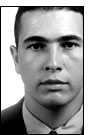
The tragic shooting of Jean Charles de Menezes (left) raises important questions about eyewitness testimony and face recognition. BBC news have an article concentrating on the incredible disparity between different eyewitness reports of the event. But, more importantly for the police and for all our safety, how easy is it to mis-identify an unfamiliar person?
Psychological studies into the difference between how well familiar and unfamiliar faces are recognised shows some surprising results. Early studies found that people were terrible at identifying unfamiliar faces from CCTV footage – barely better than chance. A later study using higher quality video only showed an improvement upto about two-thirds – still a poor rate. In contrast, research consistently finds that people are extremely accurate at identifying familiar faces, even when the video footage is very poor.
Most people are not aware how poor they are at identifying an unfamiliar face. This realisation by the police officers at the centre of the scandal might have meant the difference between life and death. Wikipedia page on Jean Charles de Menezes