
Even when human memory is working normally, it is still frequently unfaithful. Instead of the total recall of, say, a video camera we get something more like a symbolist, or even abstract painting. Sights, sounds and smells are refracted by our minds into memories that often tell more about us than the original events they apparently record.
Psychologists have found many processes that act like lenses, creating distorted memories of original events. These processes include things like cognitive dissonance, the consistency bias and misattribution. But what power do these distorted or false memories hold over the mind? How far are they able to weave themselves into the tapestry of our lives? In short: can false memories affect our everyday thought and behaviour?
According to the results of a new experiment reported in Psychological Science, false memories could have many and varied behavioural consequences: just like ‘real’ memories, they may well be able to reach forward to the present and dramatically change how we think and behave.
Implanting false memories
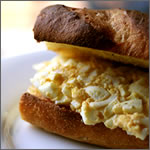
To investigate the power of false memories Dr Elke Geraerts and colleagues (Geraerts et al., 2008) first had to induce false memories in participants: in this case that egg salad made them feel sick.
To achieve this, participants were invited to take part in a study they were told was about ‘food and personality’. They answered a number of questions about food which were apparently to be entered into a computer programme to produce a profile of their early childhood experiences with food.
A week later two-thirds of the participants were told in this profile that they had got sick after eating egg salad at an early age, while the remainder – the control group – were not. The experimenters then had to check who had accepted this false memory as one of their own, and who had not. Using questionnaires they discovered that almost half of the experimental group had taken the bait and created a false memory while the rest were ‘non-believers’. This demonstrates, once again, just how easy it is to induce false memories in some people.
Avoiding egg salad
The second stage of this experiment took place four months later when the participants were contacted by a different experimenter apparently about a different study – of course this was just a ruse. Participants were told this study was about people’s preferences for different types of foods. A variety of different types of sandwiches and drinks were on offer for participants to test and rate, but most of these were a distraction as the experimenters were most interested in those egg salad sandwiches.
After the participants had left they tallied up how many of each type of sandwich had been consumed. They found that those who had accepted the false memory about getting sick after eating egg salad sandwiches ate far fewer of these sandwiches than those in the control group or those who were ‘non-believers’.
While the non-believers and control group ate, on average, about 0.4 egg salad sandwiches, the false memory group ate only about 0.1. They were certainly avoiding the egg salad as this pattern of consumption wasn’t seen in any of the other types of sandwiches.
Re-imagining the past
What this study clearly shows is that not only is it possible to instil false memories in a significant minority of people, but that these false memories can have a marked effect on behaviour.
Naturally this should make us wonder which of our preferences, attitudes, or phobias even, might be based on false recollections. Could that distaste for yellow peppers have stemmed from a false memory of getting sick after eating them? Or could that desire for a seaside home be built on childhood beach trips misremembered as enjoyable?
What this experiment underlines is the idea that the way we remember, interpret and, perhaps, re-imagine the past has a profound effect on how we think and behave in the present.
» Find out more about the 7 sins of memory.
[Image credit: ghirson]