
FREE! But at What Price?

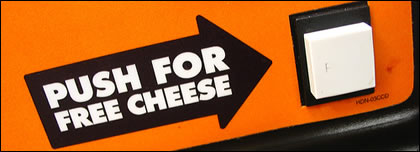
Free Cheese

We like 'free' because it makes us feel good and there's no downside. But sometimes 'free' tricks us into poor decisions.

There is one magical price that we don't evaluate in the same way as other prices. Unlike the others, this number is guaranteed to make us go mad with desire. It makes us do strange things, it messes with our minds. That price is....FREE!

Imagine you are in the market for an Amazon gift certificate. Consider which of these two offers you would go for (try to do it quickly):
  • A $10 gift certificate for FREE!
  • A $20 gift certificate costing $7.

If your first instinct is the same as absolutely everyone in a study carried out by Shampan'er and Ariely (2006) you'll take the first option, the free option. Economically, though, this doesn't make any sense. When you look at it you can see that the $20 gift certificate is actually better value: you actually get a $13 gift certificate for free, but this is camouflaged by the question. That word 'free' just shakes all rationality out of us.

Now compare these two offers and decide which you'd prefer:
  • A $10 gift certificate costing $1.
  • A $20 gift certificate costing $8.

Now if you're like the majority of people (64%) in Shampan'er and Ariely's (2006) study you'll go for the $20 gift certificate.

The rational-mind-confusing power of the word 'free'.Notice that this time the price of each gift certificate has only been increased by $1. The $10 gift certificate has gone from $0 to $1 and the $20 gift certificate has gone from $7 to $8. Yet without the rational-mind-confusing power of the word 'free', most people suddenly realise that the $20 deal is superior, and decide to pay out for a better return.

The emotional power of free


This means the word 'free' is so powerful that we will voluntarily choose a worse deal. Why does this one simple word have such power? Shampan'er and Ariely (2006) argue that there are two major reasons why 'free' is so powerful, and they're both emotional. 'Free' makes us feel good and 'free' has no downside; it we didn't pay we've got nothing to lose if our decision turns out to be wrong. So it's hard to feel bad about 'free'.

To check out the emotional impact of 'free' they asked 243 participants to indicate how happy each of these deals made them:
  1. A Hershey's bar for free.
  2. A Hershey's bar for 1 cent.
  3. A Lindt chocolate (higher quality) for 13 cents.
  4. A Lindt chocolate (higher quality) for 14 cents.

The pattern of results showed that people felt more positively about the Hershey's bar being free than would be expected by it only being 1 cent cheaper. In comparison people were only slightly more happy when the Lindt chocolate was 1 cent cheaper.

Get free stuff! (when you buy other stuff)


These findings have been well-understood by advertising and marketing professionals for decades. Crow-barring the word 'free' into any deal will usually improve its allure, even when, strictly speaking, you're not really getting anything for free.

Think about the ubiquitous 'buy-one-get-one-free' deals in which you don't really get anything for free - you're just paying half the price. While half-price is good, it doesn't sound as good as free, does it?

Be aware of the seductive power that 'free' holds over your mind - and you might decide you don't want to pay the price.

» Read more on the psychology of money.

» If you enjoyed this post, subscribe to PsyBlog (RSS).

[Image credit: vidiot]

Reference

Shampan'er, K., & Ariely, D. (2006) How Small is Zero Price? The True Value of Free Products. Working Paper 06-16. Federal Reserve Bank of Boston's Research Center for Behavioral Economics and Decision-Making.

Labels:

Like this post?

11 comments

Blogger Dave on 4/4/08 9:02 PM 

On first glance I would say people are correct... I wouldn't be sure I would ever use the gift card. If I pay $7 for a $20 card and don't use it I'm out $7. If I get a free $10 card and don't use it, I'm out nothing. Its worth me "losing" $3 if I do end up use the card since I so rarely purchase stuff on Amazon.

Blogger shadowlapis on 4/4/08 9:50 PM 

Case in point:

"Free Health Care" -- What a swindle!

Blogger Julie on 4/4/08 10:38 PM 

Interesting study, and very true. I would have liked to hear more details about psychologists' theories on why people think this way.

In the grocery store, I always look at price per ounce. Sometimes Piaget's theory of conservation catches up with you if you're not careful.

Blogger Jeremy (PsyBlog author) on 5/4/08 1:26 PM 

Dave, I'm sure you're right to a certain extent. But the problem with this explanation is that it doesn't quite get to the heart of the findings here.

If what you're saying explains the effect then in the second scenario everyone should choose the $10 gift card costing $1, because then they're only out $1 (compared to $8 for the second option) if they don't use it, in fact only 36% do.

Blogger miehen silmä on 5/4/08 1:35 PM 

One thing to notice: when you get something for free it's a gift, when you pay for something (no matter how little) it's a trade. Thease two things have very different meanings in human society.

Blogger Michael Meadon on 6/4/08 1:17 PM 

Very interesting post. It links up quite nicely with Chris Anderson's Wired piece on free being the future of business: http://www.wired.com/techbiz/it/magazine/16-03/ff_free?currentPage=all

Blogger Growing Freedom on 9/4/08 1:43 PM 

I think Dave and miehen are onto something. And while I agree with the authors that the buying something for free in these examples can be seen as irrational, I do believe there is some unmentioned reasoning going on. As miehen hints, transactions are 'irrational' in that they are also about the relationships involved. Gifts vs. trade involve differing emotional engagements.

I'd like to see the study repeated with must-have items such as food, shelter, or water. Or stock-pile-able items such as canned goods, firewood, or direct deposits. I think the behavior will change in these cases...

Blogger Jeremy (PsyBlog author) on 17/4/08 8:56 AM 

Michael, thanks for the pointer - interesting article.

Growing Freedom, I'm not sure why you think people's behaviour would change if you used those goods. Surely 'free' would still have power?

Blogger Paul Sweeney on 23/4/08 2:50 PM 

Isn't this all about the power of the downside in the decision? i.e. "you can loose the $7 if you don't like the product, or they don't have it, etc. etc." Free has no downside (other than your time, and attention). The "gifting" of the $10 is a great point. This means that you are probably compelled to use it. Thus the "free" got you to change a pattern of spending or behaviour, to experience the service, and might have been worth the marketing cost.

Blogger Jeremy (PsyBlog author) on 29/4/08 3:57 PM 

Paul, yup that's what they found, plus we seem to behave more positively towards free things as well.

Blogger Tim on 10/6/08 8:33 AM 

I seem to be in the minority because I would go for the $10 gift card at a $1 than the $20 dollar card for $8. In fact I fail to realize how the later is the superior gift since you're only paying 10% for the $10, while paying 40% of the value for the $20 one. Maybe my failure also explains why some, but not all, people go for free since it may be based on an unconscious relationship of perceived value. Thus paying nothing for something will always be better than paying 35% for it.