
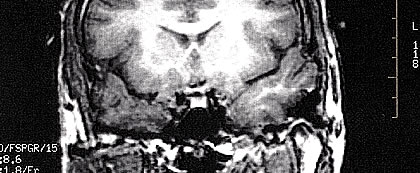
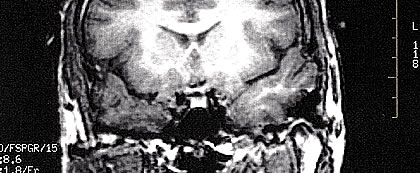
On February 2, 2001 distinguished sleep and dream researcher Professor J. Allan Hobson had a stroke in his brain stem. For 10 days Hobson could neither sleep nor dream. Then he realised the stroke was localised to the exact part of the brain he had been studying experimentally in his sleep research with cats. Call it poetic justice, or just sheer bad luck, either way Hobson approached the experience like a scientist and decided to document it, just as he had with the cats, but this time from the inside.
Hobson was told by doctors he had a classic case of Wallenberg’s syndrome – the symptoms included difficulty moving, especially his right leg and arm, problems with balance and double vision. While the doctors were excited that he was a ‘classic case’, he wanted to go beyond the dry medical description and document the subjective experience of a stroke in this part of the brain.
“Time is exquisitely attenuated in the hospital because there is nothing to do except try to keep from drowning in my own saliva or falling off the bed due to vertigo. So I lay for hours in my bed, flat on my back with my eyes closed. The worst time is the night because I am alone, usually from 7 p.m. to 7 a.m., and because I cannot sleep a wink. The usual side position does not help; I’m just awake, my mind working actively in the dark all night long.”
Well into his stay in hospital, Hobson begins to hallucinate, an oft-reported side-effect of sleep deprivation:
“I suddenly felt as if the bed were rotated 90 degrees in a counterclockwise direction and catapulted downward toward the front of the hospital and into the sea. The illusion that I was actually moving at very high speed for at least 100 meters through space was so completely convincing – and so terrifying – that I said to myself, “So this is what death is like.” To my amazement, these sensations abated as rapidly as they had begun, but they made a very lasting impression on me.”
Later in the year Hobson contracted pneumonia, then suffered a cardiovascular collapse and was close to death. He pulled through but in the process of treatment was given drugs which he, as a physician, had previously administered to others. He documents the effects of loroazpam:
“Ambien (loroazpam) is associated with confusional states in the elderly, and it certainly confused me. I took it twice and both times had similar reactions: I was convinced that I was sleeping not in the hospital but in an attractively designed summer camp. There were families there that I might or might not know, but I sensed that I should know them. There were women talking, in what I took to be a kitchen, about making provisions for the other campers. Later, I realized that these were the voices of nurses outside the door of my hospital room.”
During this second visit to hospital he was again unable to sleep for a period and experienced more hallucinations and later further psychotic episodes.
He has now come through the experience battered, but still alive:
“Today, I am far from the physically hearty, athletic, and emotionally charged man I was before my stroke. I walk with a wobble. I cough explosively. I feel a constant tugging of my right eye and cheek. I have an unnerving sensation that someone is giving me a hotfoot in my left shoe. Yet, the part of me that is healthy can observe, analyze, and hypothesize about the part that is ill or dysfunctional. At first, when people would ask me how I was doing, I would hesitate, then offer either of two useful stories: 1. I am fine, or 2. I am very impaired. Now I say, “The part of me that is talking to you is fine.” That says it all.”
» Read the full account: Shock Waves: A Scientist Studies His Stroke
» More on Allan Hobson’s anti-Freudian stance in ‘Hobson’s Choice‘ from The Believer (via 3quarksdaily)