
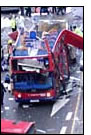
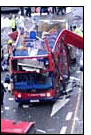
 As the dust settles on the terrorist bombings that hit London yesterday, and people begin to take stock of what has happened, thoughts will doubtless turn to how such atrocities can be avoided.
To understand that, it is useful to examine how a single person could be brought to carry out such an extreme act of violence. Professor Fathali M. Moghaddam discussed the psychological processes that lead up to a terrorist act in an article published in early 2005 in the American Psychologist. This article analyses how an ordinary person might become a terrorist:
1. Members of a population feel they have suffered injustice and unfairness and are frustrated by normal channels of decision-making.
2. Aggression about that injustice is displaced onto a perceived ‘enemy’ – this will often be as a result of influence by a leader.
3. Engagement with a terrorist organisation – this encourages greater identification and integration of the terrorist’s morality.
4. Actual recruitment by a terrorist organisation. Once within this group there is an acceleration in ‘us-versus-them’ thinking.
5. Training of specific individuals by the terrorist organisation to carry out a terrorist act. This includes the sidestepping of the psychological mechanisms that will stop a person killing others or themselves.
Professor Moghaddam points out that, in the past, efforts to fight terrorism have been focussed on the individuals who have already reached the fifth stage and become terrorists. This ‘hunt the terrorist’ approach is clearly not effective. Governments should be encouraged to adopt policies that are effective at the lowest level to reduce the number of people likely to rise through the stages. In other words: address the cause, not just the symptoms. The staircase to terrorism: a psychological exploration (Article Abstract)More on London bombings: Profile of a Terrorist, Why We Are Glued To The TV and Guardian Journos Disorientated