
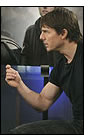
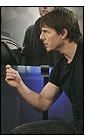
 Psychology suffered a crushing blow yesterday as Tom Cruise announced he did not believe in it. Psychologists and psychiatrists across the world shrugged their shoulders, admitted defeat and packed their couches and salivating dogs away.
Jerome Dane from the University of Slough was particularly distraught, “I had hoped this day would never come, but you’ve got to accept it when you’re rumbled,” said a sobbing Dane. “I knew I couldn’t go on once he’d exposed us. What power do we have compared to the mighty Tom Cruise? He knows so much.”
So what does the future hold for these out of work psychologists? Dane told us, “My problem is that all I know how to do is fabricate experiments and lectures. Perhaps I’ll just go ahead with my first love of creative writing and do the novel I’ve been thinking about.”
A psychiatrist who refused to be named told us that Cruise was probably smarting from the incident last week when he was squirted in the face by a water-filled microphone for a TV comedy show. After that kind of humiliation, the discredited psychiatrist explained, it’s not surprising that he lashed out at the social sciences – but it may not end there.
Unconfirmed reports are coming in that Robert De Niro has indicated he is little sceptical about parts of radiochemistry while Paris Hilton thinks that physics might just be ‘all made up’.