
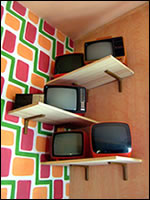
When I walk into someone’s home, almost without thinking I look around at the whole decor, but I’m particularly interested in prominently displayed objects. It gives me a sense of the person. Indeed studies have shown it is possible to draw some limited conclusions about personality from personal spaces like homes or offices (Gosling et al., 2002). What about couples though? Is it possible to tell anything about relationships from objects that are prominently displayed? Research by Lohmann, Arriaga and Goodfriend (2003) suggests it is.
In this research participants were asked to sit in the room in which they most often entertained guests and list their five favourite objects. They were then asked a subtly different question: which objects did they most want visitors to notice?
Then later on in the questionnaire they were asked how these objects had been acquired. Were they acquired on their own, by their partner or together? Joint acquisition covered the situation where the object had been given as a gift to both of them, or was bought when they were together.
Two measures were calculated from this data:
- Couple markers – percentage of favourite objects jointly acquired.
- Couple displays – percentage of objects jointly acquired that they wanted visitors to notice
Results
These percentages were then compared with a series of measures assessing the health of participant’s relationships. First, the results showed that couples who were closer, better adjusted and perceived their relationship as long-term were more likely to want visitors to notice jointly acquired objects.
Second, the results also showed that closer couples were more likely to have a higher percentage of ‘couple markers’ – favourite objects that were jointly acquired.
This study is a really good illustration of the way in which a person’s environment can reflect not only their own personality but their relationship with their significant other. Why not look around your own living room – perhaps it contains some home truths?
Thanks to Dr Grumpus for suggesting this study.
 References – Click here to toggle visibility